
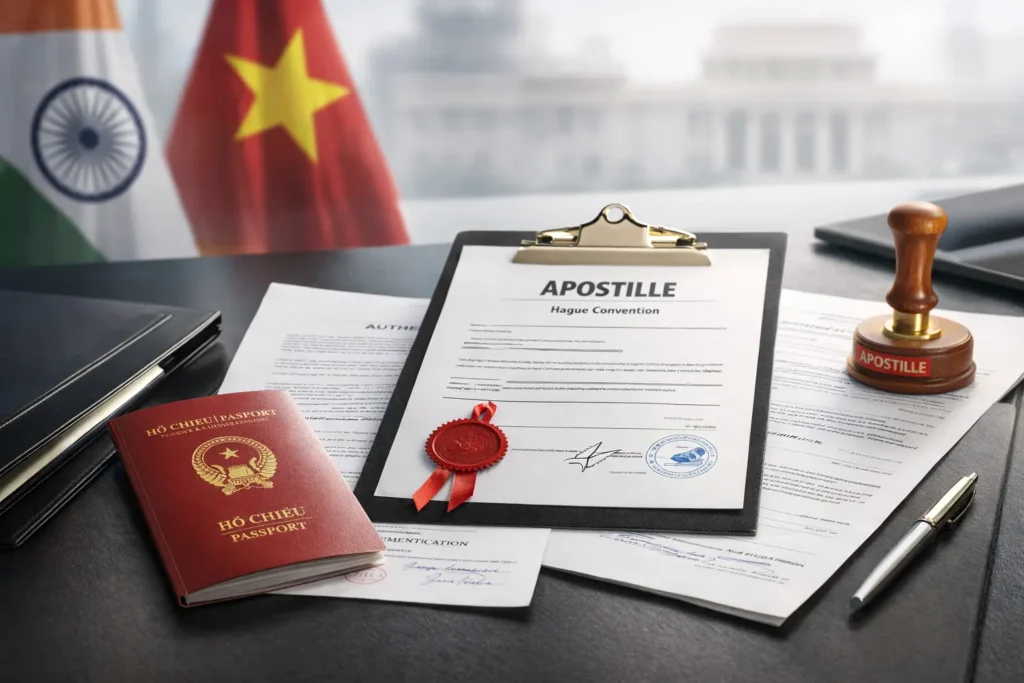
Sri Lanka is one of the most preferred destinations for Indians seeking higher education, employment opportunities, business expansion, long-term residence, and family settlement. Whether you are applying for a student visa, work permit, business registration, or family-related immigration, Indian documents are not accepted in Sri Lanka without proper legal authentication. This is where Sri Lanka Apostille becomes mandatory.
When individuals or companies move abroad, government authorities in Sri Lanka require foreign-issued documents to be legally verified before they can be accepted for official use. Apostille ensures that Indian documents are recognized as valid, authentic, and legally acceptable in Sri Lanka.
Understanding the Sri Lanka Apostille process is crucial, as even a small mistake in documentation or sequencing can lead to delays, rejections, or legal complications in Sri Lanka. This page explains everything you need to know about Sri Lanka Apostille services in India in a clear, practical, and human way.
Why Apostille Is Required for Sri Lanka
Authorities in Sri Lanka strictly follow international legal verification norms. Any document issued outside Sri Lanka must be authenticated before it can be accepted by government departments, universities, employers, courts, or immigration offices.
Apostille acts as international validation that confirms:
The document is genuine
The issuing authority is legitimate
The document has been verified by Indian government authorities
Without apostille, Indian documents are considered legally invalid in Sri Lanka, regardless of their original authenticity.
For example:
A degree certificate without apostille may not be accepted by employers in Sri Lanka.
A marriage certificate without authentication may not be valid for dependent visas.
A birth certificate without legalization may be rejected for family immigration purposes.
This is why apostille is a mandatory legal step for anyone planning to use Indian documents in Sri Lanka.
What Is Sri Lanka Apostille?
Sri Lanka Apostille is an official authentication carried out by the Ministry of External Affairs (MEA), Government of India. The apostille is affixed in the form of a sticker or stamp on the original document.
Once a document is apostilled:
It becomes legally recognized in Sri Lanka
No further embassy attestation may be required (depending on country rules)
It is accepted by authorities across Sri Lanka
Apostille confirms that the document has been validated under international document legalization standards.
Types of Documents Apostilled for Sri Lanka
Different categories of documents are required for different purposes in Sri Lanka. Each category follows a slightly different authentication route before apostille.
The most commonly apostilled documents for Sri Lanka fall into three main categories:
Personal documents
Educational documents
Commercial documents
Choosing the correct category is important, because each follows a separate legalization sequence.
Personal Documents for Sri Lanka Apostille
Personal documents are commonly required for family visas, residence permits, marriage registration, and legal matters in Sri Lanka.
These include:
Birth certificate
Marriage certificate
Divorce certificate
Death certificate
Police clearance certificate (PCC)
Affidavits
Power of attorney
Adoption or custody documents
These documents are usually verified by the State Home Department before MEA apostille.
In Sri Lanka, personal documents play an important role in immigration and residency applications. Any error in authentication may lead to rejection or delay.
Educational Documents for Sri Lanka Apostille
Students and professionals moving to Sri Lanka for education or employment must apostille their educational documents.
Commonly apostilled educational documents include:
Degree certificates
Diploma certificates
Mark sheets
Transcripts
School leaving certificates
Professional qualification certificates
Universities and employers in Sri Lanka carefully examine apostilled educational documents before issuing admissions, work permits, or job approvals.
Educational apostille often requires verification from the issuing university or education board, which can add processing time.
Commercial Documents for Sri Lanka Apostille
Businesses planning to operate or expand in Sri Lanka must apostille commercial documents.
These documents are used for:
Company registration
Trade agreements
Legal representation
Taxation matters
Import-export compliance
Common commercial documents include:
Certificate of incorporation
Board resolutions
Power of attorney for business
Memorandum of association
Articles of association
Commercial invoices
Business contracts
Commercial documents typically require authentication from the Chamber of Commerce before apostille.
Importance of Correct Apostille for Sri Lanka
Sri Lanka authorities are known for strict documentation compliance. Incorrect apostille, missing authentication, or wrong sequencing can result in:
Visa rejection
Admission denial by universities
Employment offer cancellation
Business registration delays
Legal complications
Authorities may not provide an opportunity to correct errors once documents are rejected. This is why professional handling of Sri Lanka Apostille is highly recommended.
Translation Requirements for Sri Lanka
In many cases, authorities in Sri Lanka require documents to be submitted in the local language.
Even apostilled documents may not be accepted if they are not translated properly.
Key points regarding translation:
Translation must match the original document exactly
Incorrect translation can invalidate the apostille
Certified translations are preferred
Apostilled documents and translations must be consistent
Translation requirements depend on the purpose and the authority where the document will be submitted in Sri Lanka.
INCCS provides certified translation support to ensure documents remain compliant and accepted internationally.
Who Needs Sri Lanka Apostille Services?
Sri Lanka Apostille services are commonly required by:
Students applying to universities in Sri Lanka
Professionals seeking employment in Sri Lanka
Families applying for dependent or spouse visas
Individuals registering marriage in Sri Lanka
Businesses expanding operations into Sri Lanka
Legal representatives handling cases in Sri Lanka courts
Each category has specific documentation and compliance requirements.
Processing Time for Sri Lanka Apostille in India
The time required for Sri Lanka Apostille depends on:
Type of document
Issuing authority
State-level authentication timelines
Completeness of documents
Educational and personal documents may take longer if verification is required from universities or state departments.
Delays often occur due to:
Spelling mismatches
Incomplete documents
Incorrect document format
Missing prior authentication
Proper planning helps avoid last-minute issues.
Common Mistakes to Avoid During Sri Lanka Apostille
Many applicants face rejection due to avoidable mistakes such as:
Submitting laminated documents
Name mismatch between documents
Incorrect document category selection
Skipping state authentication
Using uncertified translations
Assuming embassy attestation rules incorrectly
Apostille must follow the correct legal route for Sri Lanka requirements.
Why Professional Apostille Assistance Matters
Sri Lanka Apostille may look simple, but the backend process involves multiple authorities, strict sequencing, and precise documentation.
A professional apostille service provider:
Reviews documents before submission
Identifies errors early
Applies correct authentication sequence
Ensures compliance with Sri Lanka requirements
Saves time and effort
INCCS supports applicants by managing the entire Sri Lanka Apostille process with accuracy and transparency, helping avoid unnecessary delays and legal issues.
Sri Lanka Apostille Validity
Apostille itself does not have an expiry date. However, the authority accepting the document in Sri Lanka may impose validity limits depending on:
Document type
Purpose of use
Date of issuance
For example, police clearance certificates may only be accepted within a specific timeframe.
Sri Lanka Apostille vs Embassy Attestation
Many applicants are confused between apostille and embassy attestation.
For Hague Convention countries:
Embassy attestation is not required
MEA Apostille is sufficient
Apostille replaces embassy legalization
For non-Hague countries:
Embassy legalization is mandatory
Additional attestation may apply
It is crucial to follow the correct legalization method based on Sri Lanka regulations.
INCCS ensures applicants avoid incorrect submission routes.
Using Apostilled Documents in Sri Lanka
Once apostilled, documents can be used in Sri Lanka for:
University admissions
Work permit applications
Residence permits
Business registration
Legal proceedings
Family reunification
Authorities in Sri Lanka recognize apostilled documents across regions under international legalization norms.
Final Thoughts on Sri Lanka Apostille
Sri Lanka Apostille is a crucial legal step for anyone planning to use Indian documents in Sri Lanka. While the process may seem standardized, strict compliance with documentation rules is essential.
Errors can lead to serious consequences, including visa refusal, legal delays, or rejection. Proper verification, correct sequencing, and accurate translation are the pillars of successful Sri Lanka Apostille.
INCCS ensures that documents are processed professionally, securely, and in accordance with Sri Lanka requirements, helping individuals and businesses move forward with confidence.